
Patti's After-Party: "I never got rich doing this, but I have lived an amazing life." Bass Stories With Dave Fowler
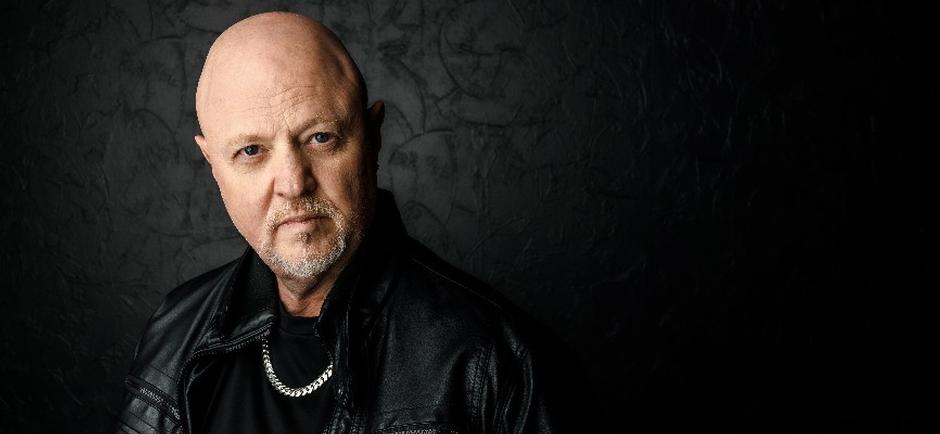

Nashville-based bass player Dave Fowler has had, and continues to have, a sensational career as a touring musician. He's worked with world-class artists and traveled extensively. Not too shabby for a kid from a tiny place in Western North Carolina. Is it a Cinderella story? A little bit. We'll get into that later, but for now, let's head back to way before Fowler was even born. You see, there was a chance that he never would have been born at all, had some doctors been right some 73 years ago or so.
At that time, a 13 year old girl was playing on the porch of her friend's house when tragedy struck. Her friend's five year old little brother got his hands on a gun, resulting in a grave situation. That 13 year old girl was Dave Fowler's future mother. The gun accidentally fired, hitting her and causing life-threatening injuries. Fowler revealed, "She was just 13 and it was quite the harrowing experience. She wasn't supposed to live through the night. The doctor said, 'If she even lives, she'll never be able to have children.' The gunshot just about literally blew her in half. That was terribly devastating, but she not only lived, I still have her today. She's 86 years old."
Fowler's parents were married for 56 years when his father passed away in 2018. "She outlived my dad. She's quite an amazing woman, you know? Most notably, I love to point out that not only did she survive, but even though she only had one good arm due to the shotgun blast getting the bulk of her left arm, she wound up playing high school basketball with one arm. She made the team. They were always fearful if she fell it would further damage her arm, but she never did. I have a pretty cool mom."
He lives in Middle Tennessee these days, but I asked the talented bass player to talk about his upbringing and his hometown. He began, "My hometown is right outside of Asheville, North Carolina. It's a little valley called the Swannanoa Valley, it's an old Indian village. The Cherokee Indians were pretty dominant in that area, hence Cherokee, North Carolina. Swannanoa was a little Indian village years and years ago and it's a very small place. It's a little further east than Asheville and it's just a beautiful spot. Unfortunately, when the big floods hit Western North Carolina a few years ago, it completely wiped out Swannanoa. A lot of people died. I had childhood friends that died in those floods. Fortunately, my family are all still alive and they were safe. It was quite a mess when all that happened. Swannanoa is where I grew up. I graduated from Charles D. Owen High School in 1981. I had a wonderful childhood in Western North Carolina.
Dave Fowler was a young boy when he started playing music. He shared, "I've heard a lot of musicians say this, but I didn't truly 'get it' until I started speaking about it, but it was like the bass chose me. My family sang at church and the bass and the piano were the prominent instruments at the services we attended. I thought I wanted to play drums, but that was short-lived. I did that for a minute, but my family always needed a bass player when they sang at church, so I thought, 'It's only got four strings, how hard can it be?'"
So was the bass harder than he thought? "No it wasn't because I was so determined to be good at it," he explained. "I grew into the instrument rather quickly. I was obsessed with it and I played a lot, like every waking moment that I didn't have something else to do, I had that bass in my hand. It just kind of evolved and fortunately, the more that I learned and the more that I discovered R & B and the role of bass in soul music, rock, country and of course, southern gospel, the more I became intrigued with it. I always wanted to learn more. It just evolved from there and grew and grew until eventually it would become my job.
His resume is impressive. He's worked with so many greats over the years. I commented to Fowler that he had to have worked really hard to be credited with all thing things he's done. He responded, "I did. I worked very hard in my early years. I was in a club band and we played clubs five to six nights a week and traveled on the seventh day, typically to the next gig. As I recall, I was the only guy, as a 19 year old, on the road full-time and I was also the only guy in the band that would take my instrument back to the hotel after we had played all night. I would sit there and play until my frickin' fingers would bleed. I would just play and play and play. I was really obsessed. Funk music was just starting to happen and Larry Graham of Graham Central Station had developed what is called the 'slap technique,' which is very popular. That was just beginning to be heard on funk records and I got so enthralled in that. I wanted to learn what I heard on those records. Unfortunately, when I was a kid we didn't have YouTube and all that stuff to learn from."
I replied, "No, there was nothing to watch." He answered, "I had to figure it out and it wasn't easy. But it was also good because it really demanded your ear. You had to completely rely upon your ears. I didn't have anything else. VHS tapes were just barely coming out with a series called Star Licks by popular musicians, but it was expensive then, like 60 to 80 bucks. That was a fair amount of money then for a young working musician. That was three or four days of bagging groceries to make that much money. That's the only tool we really had was the VHS. If your family didn't have a VHS player you were still out of luck, so you figured it out. There were guys at music stores that knew what was goin' on and I'd listen to the radio a lot and that's how I figured it out. My mom, after her accident, didn't know how to do life, but she figured it out." It was obvious his mom's DNA carried over to her son; when there's a will, there's a way.
The young Fowler arrived in Nashville when he just turned 21. He owes that move to the late singer/songwriter Helen Cornelius. He shared, "Helen had some minor hits in the 70s. She was a duet partner with Grand Ole Opry star Jim Ed Brown. They had a really big hit called "I Don't Want to Have to Marry You" (1976). It was a really big record Jim Ed Brown sailed on that for many, many years, but Helen was a wonderful songwriter and I'm so glad she took me under her wing. She was like a second mother to me and gave me my opportunity to come to Nashville in 1984 or 85, I believe it was. All the years are coming together for me now, but at that time, Helen was the opening act for many years for a a group called The Statler Brothers. During 1984-1985 they were dominating radio. They were a big touring act and to be out on the road with them was a big deal. We were playing all the small arenas and performing arts theaters around the country. Here I go from being just a kid from a small town, with a blue collar working dad to touring with Helen and The Statler Brothers."
He continued, "Growing up we weren't destitute by any means, but we were poor, you know? We didn't have a lot. I went from bagging groceries at a local grocery store and scraping for whatever I could get, to going on tour with The Statler Brothers and Helen. I was supporting myself financially, so that was a big deal."
That's a success story for sure. Fowler said, "Helen paved the way for me to be here. Unfortunately, last year she passed away. Even though I hadn't seen her in some time, I was asked to speak at her funeral. She meant the world to me, so that was a very, very emotional thing for me. It was really hard to do, I was fine until I got up there to speak." I said I imagined she appreciated it. He replied, "I hope so. She was a wonderful human and there's no question in my mind that she's in Heaven today."
So that was how Fowler's Nashville music career began. From there it was all uphill. I asked him to share some other highlights. He admitted, "It's pretty hard to narrow it down because I've been so blessed. I always say, 'I never got rich doing this, but I have lived an amazing life.' Lorrie Morgan stands out for sure. I was with Lorrie from the beginning and in sort of an odd, indirect way, I was recommended to her by her late husband Keith Whitley." I was taken aback and said, "That's quite an honor." He agreed, "Yeah, it is. He had come to Lorrie and said, 'Hang on to Dave, he's your guy.' That meant a lot to me and Keith told that story on stage a few times. It was quite a compliment coming from him. It was six or seven years with Lorrie. We went from she and I traveling in a van to playing with house bands at different installations. We went from that to selling 12 million records and everything in between. We were touring with the supergroup Alabama, Merle Haggard and Kenny Rogers. I wound up being able to fly on Kenny Rogers' private jet. Lorrie was always good to me and I had a very close, strong bond with her, we went through so much."
Indeed, they did go through a lot together, and I wasn't prepared for what he told me next. "I was the one who took the phone call that Keith Whitley had passed." That was jarring, to say the least. He went on, "Lorrie and I were in Tacoma, Washington doing some promotional stuff for RCA Records for her debut record which was Leave the Light On (1989). We were having lunch with some Air Force guys who were doing something for the Department of Defense, I don't remember the reason. Back then we didn't have cell phones yet, so it wasn't uncommon for the manager to not be with us all the time, but he would have a pretty good idea of where we were at what time. He'd have all the phone numbers for the places we would go. It wasn't unusual to get phone calls on the road. While we were eating lunch someone came and told me I had a call in the kitchen."
I picked up the phone and it was Lorrie's manager. He said, 'Dave, my boy, Keith is dead.' Those were his exact words. I just froze for a second and said, 'I'm not tellin'...' and he said, 'Oh no my boy, you're not, but you're gonna have to go get her to the phone.' I went back and told her she had a call. She got up from the table and excused herself, and I don't know how, maybe it was a woman's intution, but we got about three feet from the table when she said, 'Keith's dead, isn't he?' It's like she knew. I don't know how she knew."
I simply replied, "Wow, what did you say?" He said, "I just took her hand and said, 'Honey, take come and take this call,' and that was it. Then we had a four hour flight home knowing that news. It was a hard day. We got through it. Life goes on." I can't imagine how difficult that had to have been, but I just said, "It does, but wow, and since then Keith has become a bigger legend every year, with new people discovering him, young people. To have been the person to have taken that call, you'll never forget that, that's just forever there, but I'm glad to know you still have a good relationship with Lorrie."
With a real sense of sincerity, Fowler stated, "Yeah, I do. She's a very close, trusted friend. For many years we've stayed in touch with each other. When she needs a substitute bass player, I'll always get the call. I loved working with Lorrie. She was very good to me. She's a great singer, a great artist and a good person, I just love everything about her."
He then began to tell me about others he's had the pleasure of working with. "There's Dolly (Parton, of course), Billy Bob Thornton, Ronnie Milsap, John Michael Montgomery and Billy Ray Cyrus. I've done so much throughout my career. I even did a thing with a few members of Cinderella. If there's one thing God gave me, he gave me the ability to play a lot of different kinds of music. He gave me the ability to do that, but not sound like a country guy trying to play rock or a rock guy trying to play country." Versatility is priceless when you're a side musician and Fowler expanded on that thought. "When I was back doing clubs, you couldn't just play rock or funk or country, you had to be able to do everything and do it well or you couldn't be part of the band. You had to be able to do those different kinds of things."
When he listed the artists he'd played with, he was really only scratching the surface. I had a long list in front of me while we spoke. I decided to pluck a couple more out and see what he had to say about them. I'm always interested in the more "colorful" types, so I asked about his work with the late Dr. John. My initial question was, "You worked with Dr. John. What would you call his music? Funk?" He set me straight. "That's called New Orleans Funk, yeah, it was his own thing. Now, with Dr. John (born Malcolm John Rebbenack, Jr.), I have another skillset of being a tour manager. I didn't actually play in his band, I was just his tour manager, but they hired me right away when they saw my resume. I really, really loved Dr. John. He was just a wonderful human being. Unfortunately, he did battle a lot of demons and he blamed himself for a lot of bad decisions he made, and rightfully so on a lot of levels, but he was just a warm, wonderful guy. I miss him. I wish I'd spent more time with him, but I really enjoyed my time with him. He and his band were just incredible, lot of fun. Yeah, I miss him very much." Dr. John passed away on June 6, 2019 of a heart attack. He was 77 years old.
We moved on to the Artimus Pyle Band next. From Lorrie Morgan to Dr. John to southern rock and the Artimus Pyle Band. Thomas Delmer "Artimus" Pyle in a former drummer with Rock and Roll Hall of Fame inductees Lynyrd Skynyrd. He is the last living survivor of the 1977 plane crash that killed Lynyrd Skynyrd band members Ronnie Van Zant, Steve Gaines, Cassie Gaines, Assistant Road Manager Dean Kilpatrick and two pilots. Pyle's life story is interesting to say the very least, and is well worth researching if music history is your thing, but I digress. The Artimus Pyle Band formed in 1981.
Fowler described how he came to join the Artimus Pyle Band, one of its projects and the aftermath. "Yeah, with Artimus, that was spawned from a couple of guys I grew up with. They were on me to join the band and the timing never lined up. Maybe the third or fourth time that they asked the timing seemed to be good, so I joined the band. Around that time I got this idea with a buddy of mine to form a small, independent record label. My buddy's name is Len Snow. We formed Get Joe Entertainment.
I couldn't believe it when he mentioned Len Snow. I piped up, "I know him!" The music industry is huge, but often still a small world. Fowler asked, "Do you really?" I said, "Yes. I met him via Billie Jo. He's her manager." Billie Jo is a wildly talented Texas artist who I've interviewed two or three different times over the years. I met Len Snow when he was with Billie Jo at CMA Fest a few years ago. I found him to be a really nice and fun guy.
Back to Get Joe Entertainment and Artimus Pyle. Fowler continued, "Yeah, so we're partnered in Get Joe and that came about even before Billie Jo. We signed Artimus to a one-record deal and Len and I, along with Kent Wells, who produced Dolly Parton for 24 years and was her guitar player for almost 40 years, we produced a record together. It was a Lynyrd Skynyrd tribute album called Anthems. You can find it on all the streaming platforms. It's the Artimus Pyle Band and the record is all Lynyrd Skynyrd remakes, but we had guest singers. We had Lee Brice ("Workin' for MCA"), Ronnie Dunn ("Sweet Home Alabama"), Sammy Hagar ("Simple Man") and Dolly ("Free Bird"). It's fantastic."
I told him I hadn't heard of the record and couldn't wait to listen to it, which I did right after the interview. It's one of the best tribute albums I've ever heard. The artists matched up with their respective songs perfectly and yes, you haven't heard "Free Bird" until you've heard Dolly Parton sing it with the Artimus Pyle Band. You can thank me after you listen to it.
Of course Dave Fowler would love for everyone to stream or download the Anthems record. He shared, "I'm very proud of it. Unfortunately, things did not end well with myself, Artimus and the two guitar players, not because of me, because of them, but I'm sure their version would be different, but that's the crux of the matter, things didn't end well. There was a lot of jealousy about me being a part of the record label, so it didn't end well and I'll just leave it at that. We did make an incredible record though. It's amazing and I'm so proud of it. Others on the project were LOCASH ("What's Your Name"), Marty Raybon of Shenandoah ("Gimme Three Steps"), Billy Ray Cyrus ("Call Me The Breeze"), Michael Ray ("I Know A Little"), Lindsay Ell ("The Needle And The Spoon"), Chris Janson ("The Ballad Of Curtis Loew"), Jerrod Niemann ("That Smell") and Warren Haynes ("Saturday Night Special"). I actually grew up with Warren." He added that everyone who hears the album loves it and I'm sure that's true. What's not to love?
If you start putting all of Dave Fowler's hats in the ring, you'll have a decent sized pile, but we're not done yet. He introduced his next trick by saying, "I've had a very storied career. Also, I've written a book. It's in final editing now. I signed a publishing agreement with a company called V13 Media out of Canada. Chris Gonda and Lance Marwood with V13 are wonderful guys there. We are having bi-weekly calls now to tighten everything up. My author is a guy named John W. Sharpe, who I ironically met through the Rock Legends Cruise, just playing those cruises with Artimus. We did three or four of them. I met John and we had lunch together. He asked me about my life and I was telling him these stories and then he asked if I ever thought of writing a book. I told him I'd thought about it, but I didn't know how to do that. He told me, 'Well, I just happen to be a writer.'"
Isn't it crazy how the right people seem to drop in at the right time sometimes? I think it is. Naturally, I wanted to know more about the book, so Fowler elaborated, "John Sharpe is from Michigan and he's such a great guy. When we partnered up with Chris and Lance at V13, they all really poured themselves into making this a reality. I'm very excited about the book."
My response was, "It's going to be a really good book, I can tell just by this interview and the little life synopsis you've given me. I love autobiographical books about anybody that's interesting and I love learning more about musicians because they go all over the place. There are always a lot of stories, so I'm excited about reading it as well." He gave further details about the book. "It won't be like your traditional book. It will start with my mother's story and then from there it'll be how I grew up with my family and then it'll go into a series of short stories of all the artists that I've worked with and how it was being on the road with them. I'm proud of it." The book, set to release by the end of 2026 is called BASSically Speaking. You can learn more about it by visiting the V13 Media website https://press.v13.net/releases/bassically-speaking-by-dave-fowler/.
So what else is there? There are TV appearances and like the artists he's worked with, there was a pretty good list of shows he's been on. Since I couldn't cover everything, I chose one to talk about. I asked Fowler, "Just for instance, what were you doing The Tonight Show with Jay Leno?" He answered, "I did that a couple of times with Lorrie Morgan and once with Billy Ray Cyrus. Other things I did with Billy Ray were The View, Jimmy Fallon and a Dodge Ram Series on YouTube. The YouTube series is pretty cool. We did 'Old Army Hat' and 'I'm American.' The Tonight Show was really cool because I got to do it one time when Johnny Carson was still there." I said, "Really?" He replied, "Yeah, that was with Lorrie in the very early days, it was like 1987. I was also on an episode of Walker, Texas Ranger with Tracy Lawrence. It was the episode where Walker gets married and we were the wedding band. As I recall, I don't think they showed me much at all. They showed my arms playing, but it was still pretty cool." If you'd like to look that episode up and watch it, it's the two-part series finale in season 8. The original air dates were May 19-20, 2000.
I suppose that's it. We've exhausted all of Dave Fowler's many talents and we can wrap this thing up, right? Wrong. He's a public speaker. He said, "I have done some public speaking and I'd like to do more if anybody's out there that would like me to come and speak. I've done it in the public school systems for kids who are interested in pursuing a career in music. I can speak on my experiences and let them know the reality of all that. Plus I can talk about some of the situations they might face, and hopefully they can avoid some of the pitfalls that I fell into. I really enjoy doing that for the kids." We talked about how important it is for kids to have someone to look up to these days. There have always been school bullies and stressors, but it's so much harder deal with now, with the internet and social media being available 24/7. The bullies literally have access to their targets every day and night of the year and that's torture for their victims who find it nearly impossible to find any respite.
As he said, he finds speaking at schools so rewarding and would be happy to talk about visiting one near you. You can contact him via his website or social media sites and let him know you're interested.
If you do check out his website, you'll see photos of him that make you believe he's quite patriotic. American flags and other little signs are clues, so I asked him about that. He said, "Very much so, yeah." Recently I feel like the term "patriot" has taken on some new meanings, so I took a chance and asked Fowler what his definition would be.
About Patti McClintic
 Journalist
I’m a pop culture and history nerd. I love my family, friends, random trivia and animals. I found out early I had a natural knack for creating stories and finding my way around the English language. Writing came easy for me. If I was going to write about anything, pop culture seemed like a good choice.
I spent 10 years writing for UK-based Think Country. I’ve interviewed countless artists and reviewed many shows and records. I’ve written show reviews on Charlie Daniels, Florida Georgia Line, Merle Haggard, The Cadillac Three, Randy Travis and multiple CMA Fests. Artists I’ve interviewed include Brett Eldredge, Carly Pierce, Ashley McBryde, Lonestar, Lainey Wilson and Jeannie Seely, to name just a few.
I also had a three year stint working in public relations in Nashville. I learned so much more by seeing the music business from the other side. I am forever grateful to have been given that opportunity at B Noticed PR, a highly-respected PR firm, whose clients have included Exile, Jeannie Seely, Allie Colleen, Brady Seals and Adam Hood.
When I’m not involved in the music industry, you can find me hanging out with my husband, playing cornhole or fishing. I’m a genealogy addict and I love perusing very old newspapers and cemeteries. I’m a proud mom and grandma, so family matters a lot to me, even my cat family members. I’m thrilled to be a part of Center Stage Magazine and looking forward to whatever comes my way while I’m here. There’s really nothing else like it.
